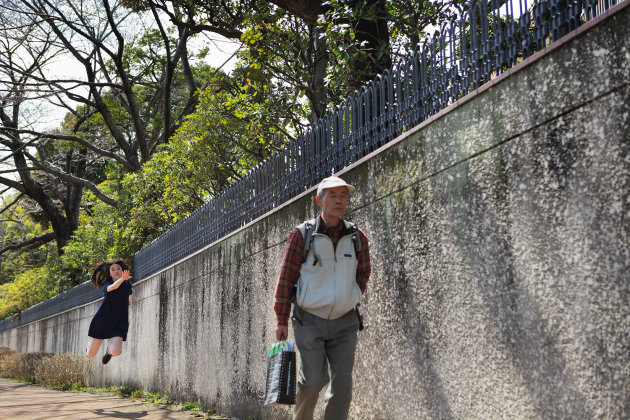
Natsumi Hayashi makes flying look easy. But the self-portraits that seem to show the Toyko photographer levitating above the ground are actually the result of a lot of hard work. "Sometimes I need to jump more than 300 times to get the perfect shot," Hayashi told MSNBC.com. Hayashi blogs a levitating picture-of-the-day each day on her website, yowayowacamera.com. (Stephanie Pappas, LiveScience )
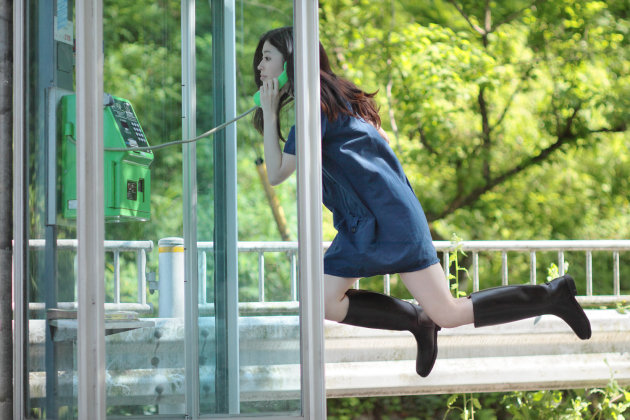
After seeing an old phone booth in a Tokyo suburb, Natsumi Hayashi was fascinated by the idea of using it in a photo. "I was inspired by the beautiful pale blue color of the glass windows to take the shot," Hayashi said. (Photo credit: Natsumi Hayashi/ yowayowacamera.com)
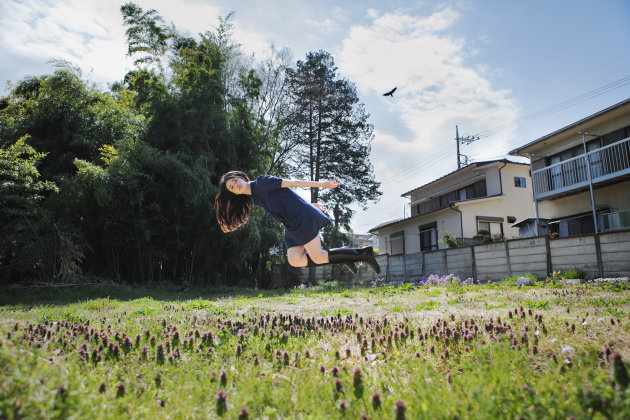
"This vacant lot reminds me an open space where I played often when I was a little child," Hayashi said. "Everything in this shot perfectly matches to the memories from my childhood." (Photo credit: Natsumi Hayashi/ yowayowacamera.com)
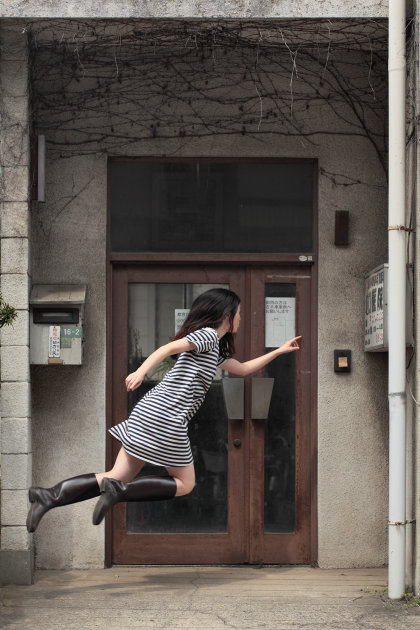
"Most buildings in Tokyo are new or clean," Hayashi said. She was inspired to take this photo at an old, abandoned building. (Photo credit: Natsumi Hayashi/ yowayowacamera.com)
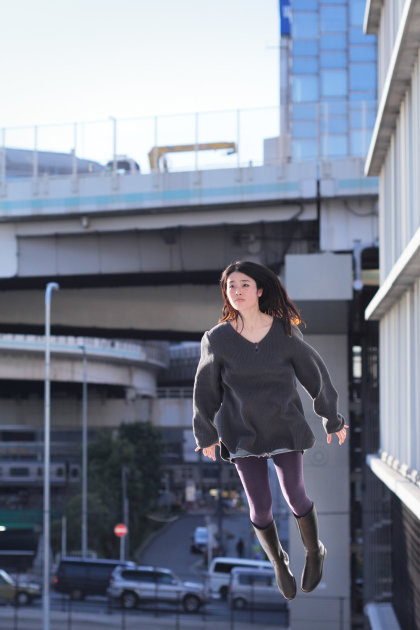
"I prefer to use backlight instead of using direct light," Hayashi said. "This shot was taken in that manner." (Photo credit: Natsumi Hayashi/ yowayowacamera.com)
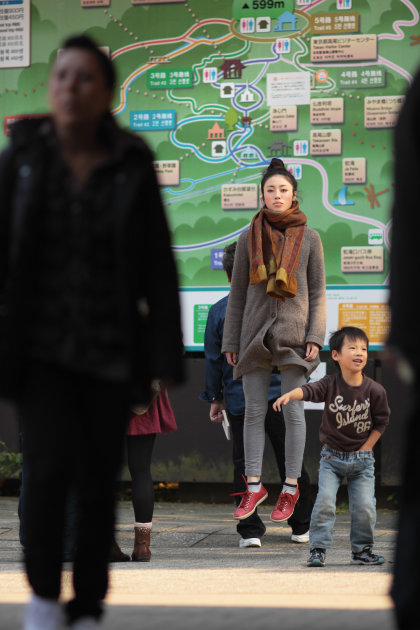
"When I take a 'levitation' photo with a crowd of people, collaboration with passersby is the most important part," Hayashi said. "Kids are always very cooperative." (Photo credit: Natsumi Hayashi/ yowayowacamera.com)
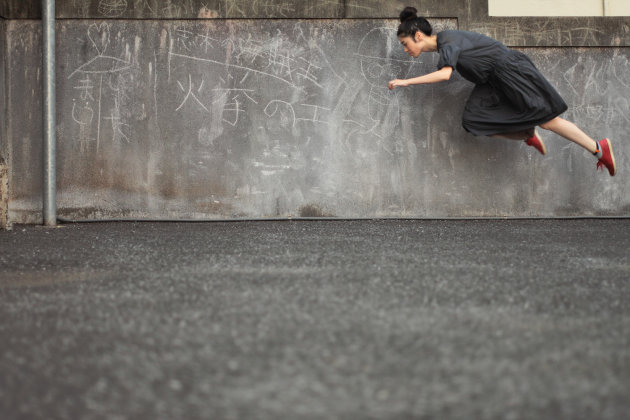
"I love seeing graffiti by kids," Hayashi said. "In this shot, a boy's name and a girl's name are written under one umbrella, which means they are in love." (Photo credit: Natsumi Hayashi/ yowayowacamera.com)
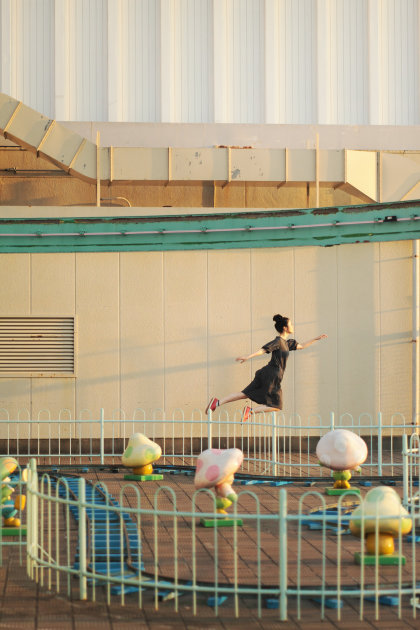
"This shot was taken at a tiny amusement park built on a roof of a department store," Hayashi said. (Photo credit: Natsumi Hayashi/ yowayowacamera.com)
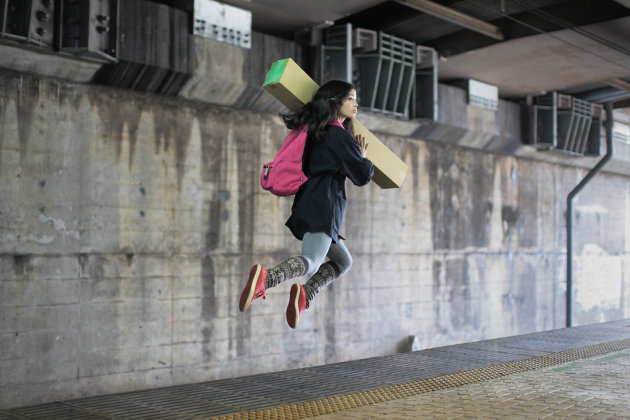
“Most train stations in center of Tokyo have huge steel structures," Hayashi said. "I took this shot under a steel bridge of a platform." (Photo credit: Natsumi Hayashi/ yowayowacamera.com)
"I didn't plan to have this man in this shot," Hayashi said. "Then I noticed he had a bag from a famous camera store in Tokyo. As he passed by, I suddenly came up with an idea about 'levitating' towards him. "'Please show me what is inside your bag'' was the line I imagined." (Photo credit: Natsumi Hayashi/ yowayowacamera.com)
Digital camera sales are going through the roof. As the quality of images from digital cameras improve they are becoming much more affordable and the sales are simply not surprising. Consumers are also becoming more comfortable with the whole idea of taking of photographs digitally.
In choosing a digital camera take into account your basic needs and what you plan to use the camera for:
Digital camera types
It doesn't matter whether you're shooting film or digital images there are basically three types of cameras. There are point and shoot cameras, prosumer cameras and professional quality cameras.
Point and shoot cameras operate automatically. They do everything for you except for framing the subject. Exposure is decided by the camera as well as whether a flash is needed or not. All you need to do is to point and shoot.
Prosumer Cameras. This camera is a step up from your typical point and shoot because it allows the photographer not only to shoot in a fully automatic mode but also to have control over various aspects of the exposure. They typically have various modes including portrait mode, a close-up mode, action mode, and landscape mode.
Resolution
It doesn't matter what sort of camera you decide to get you will have several decisions to make regarding resolution of the camera.
The salespeople of most electronics superstores are quick to tell you that the most important thing to consider when buying a digital camera is how many pixels there are. Now while it is important it is not the end all of digital image quality. Pixels are tiny squares and in some new models they're starting to use other shapes as well. The more pixels you have in your image the sharper the detail of the image will be Most current digital cameras on the market today will produce an image with more than 4 million pixels. That's enough resolution to easily print images up to 8 x 10 with good image quality. Is not likely that you will print images larger than 8 x 10 and so most of these camera should meet your needs.
Try various digital cameras before you purchase
There is a wide selection of digital cameras on the market with various image qualities even though they may have the same number of pixels. There are different kinds and sizes of image sensors, which is the chip that actually records the picture. It is recommended that you take a memory card into the store with you so that you can put it in each camera and take sample photographs that you can then take home to view on your computer to compare.
The technology is constantly improving and digital cameras will be constantly changing. Don't be surprised if several months after you purchase one there is one that is new and better with more pixels. If you take the time to choose a good quality digital camera which makes good photographs you'll be able to enjoy digital photography for a long time in the future.
If you do make the move into digital photography remember this. Many people using digital cameras simply put their photos on their computers and never actually make prints anymore. It is easy for these photos to get lost and therefore it's recommended that you print special photographs for generations to enjoy.
Making good photographs can be made to happen through good lenses but making good lenses is an art that can only be explained by veterans who are really good at this stuff. Photography lenses are very intricate to make. The very first criterion to make good photography lenses is choosing good material. Good material ensures that the lenses turn out well and have the best of quality in them. These lenses can only be said as good photography lenses if they are able to capture the finest form of images and are able to capture shots from intricate angles and certain distances. There is a lot of effort that follows this step. The material is taken out and sent for manufacturing. The lens shapes are produced in bulk post which they are made into certain ways that would make them fit into digital cameras. The lenses are brought into shape with respect to the various shaped lenses that different cameras make use of. Post their shapes, the lenses are sent to laboratories where research fellows work on inducing the requisite focal length, resolution and image clarity in them. Different lenses are given different focal lengths, resolutions and picture qualities given the demand and the camera offering these demands are fitted with the appropriate lenses.
The mechanism that the lenses are fed with is highly impressive with the features like the focal length, resolution, image quality, zoom ability and light mode varying according to different cameras. Be it the use of chemicals, or organic solvents or other technological methods, the lenses are turned into image capturing colossal that capture image after image without any glitches. The lenses are tried and tested and are put through many rounds of trials before they get deemed as ‘˜ready for disbursement’. Post disbursement, they are sent to camera makers who have engineers and technicians on board who eventually insert these lenses into the camera and the camera reach the users who click photographs emphatically. The customary and conventional methods of making the lenses have become very different in comparison to the contemporary methods of making these lenses. These days, buyers take factors like megapixels and zoom-feature into account and eventually, the lenses also need to be fed with these features to meet buyer demands. Installing these advanced features into the lenses is a very taxing task and is worked upon by research scientists who are experts in the field of optical sciences. The lenses are put through many tests to determine whether they indeed have all those features promised by camera makers and have to be to justify the claims of their partners. Making good photography lenses is a very strenuous task. The task requires a lot of tough efforts and tests before being declared as fit enough for usage and are very precariously made for the fact that they are expected by the photographer to offer them longevity. Once all the tasks are finalized, the lenses are fixed into the cameras and deemed usable.